Digitalization in the church: how transformation can work for a large organization like the EKD

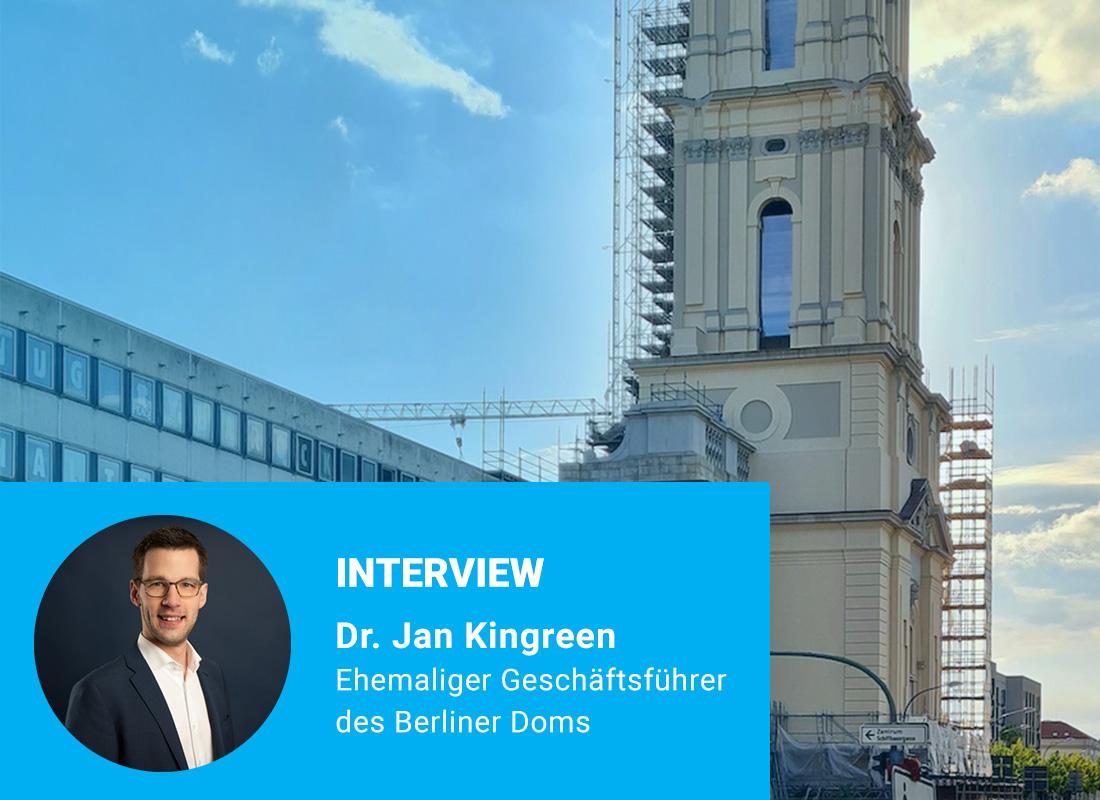
Church services, administration, community. Since the COVID-19 pandemic, digitalization in the church has been happening at breakneck speed. In an immense pressure situation, digital solutions were created in many places within a very short time that had still seemed far off two years earlier. We spoke with Dr Jan Kingreen, pastor of the tower of the Potsdam Garrison Church and former managing director of Berlin Cathedral, about
- the opportunities and challenges of digitalization in the church,
- change processes in an organization with almost 19 million members,
- and the potential of AI as a useful tool for pastors.
1 Since 1 March 2023 you have been pastor at the tower of the Potsdam Garrison Church. What is your mission there?
As you know, the churches are suffering from a loss of members and, as a result, from shrinking finances and staff. The fundamental question we are currently discussing with an open outcome is this: do we want to keep our own building in every village, which worked well enough for the past 500 years, or would we rather have a few larger lighthouse projects? In Potsdam we decided that we want to strengthen the lighthouse idea. That is why we are currently building a public space for discourse around peace and democracy. Both topics are more relevant than ever. Our goal is to bring different groups in society back into conversation with each other. From my point of view that works very well here, not least because demand for purely churchly and religious topics is simply no longer as strong, while the wish for places outside the accelerated world is growing. What makes it difficult is that the Garrison Church was also a right-wing conservative military church in the past. For us, though, that history does not mean we cannot bring our enlightened 21st century content into that place. On the contrary: where, if not here?
2 What are your two or three biggest challenges in Potsdam at the moment, and what role does digitalization play in your church?
For us too, the two big challenges are finances and staff. Money is the biggest issue, because with a single employed education officer, for example, we cannot do educational work that reaches a broad audience. And in the church, staff mostly means volunteers. Fewer and fewer people can be committed for longer periods here, and the organization of it is also very time-consuming. Digitalization of the church plays a growing role in solving both challenges. At Berlin Cathedral, for instance, I digitalized the entire administration, and I am going to do that here as well. Back then a digital data management system made our work processes considerably simpler and reduced the number of staff we needed. Connecting our volunteers through digital media also improved our communication decisively. And especially when I want to bring along a younger target group that is not over 70, access simply has to be digital.
3 Increasing digitalization has a major effect on the way people communicate and live their faith. The Protestant Church has to adapt to these changes too. Does digitalization only mean opportunities for the church, or problems as well?
Both. One big opportunity in the digitalization of the church is that digital offerings now let me reach members much faster, more easily and in a more targeted way. Second, I can potentially learn far more about them and above all about the people who are interested in us, and use that knowledge to meet them where they are. There are social studies from time to time, of course, but in fact we know far too little about the people who consume our offerings. One problem on the other hand is that change processes take an incredible amount of time given our members, who reflect society as a whole with an age range of roughly 12 to 95. When I think about how my own behaviour has changed since the first iPhone was released in 2007, I find it unimaginable to get by without a smartphone. So a great deal has moved in recent years and it will keep moving. We obviously have to take that into account without scaring off those people who do not yet have a pronounced digital affinity. Because digitalization will move forward without us, whether we as a church take part or not. That is why I think you have to give yourself a push and get on with it.
4 Many parishes have found ways to gather their members online. Why are streaming offerings and flexible service times so important for the Protestant Church in particular?
That is the one blessing Corona brought. At the cathedral it all started with a video recording on a smartphone and then grew within a few months into a studio with five cameras and a three-person production team. When we worked with TV crews at large services, in the end they left their cameras at home and only used our signal. What matters even more, though, is on-demand availability. So that our members can call up the content they want without any fuss at a time that suits them, on a Monday morning after a run, for example. That is worth its weight in gold, because it lets us meet the wish for flexibility. I completely understand it when our users want more self-determination, for instance about when they start, or having the option to jump straight to the sermon or to a piece of music. I would also very much like to extend our current streaming offering to our concerts, panel discussions, readings and other interactive evening events. And if we were then able to evaluate this user data in a data protection compliant way, we could create a completely different and very attractive feedback culture.
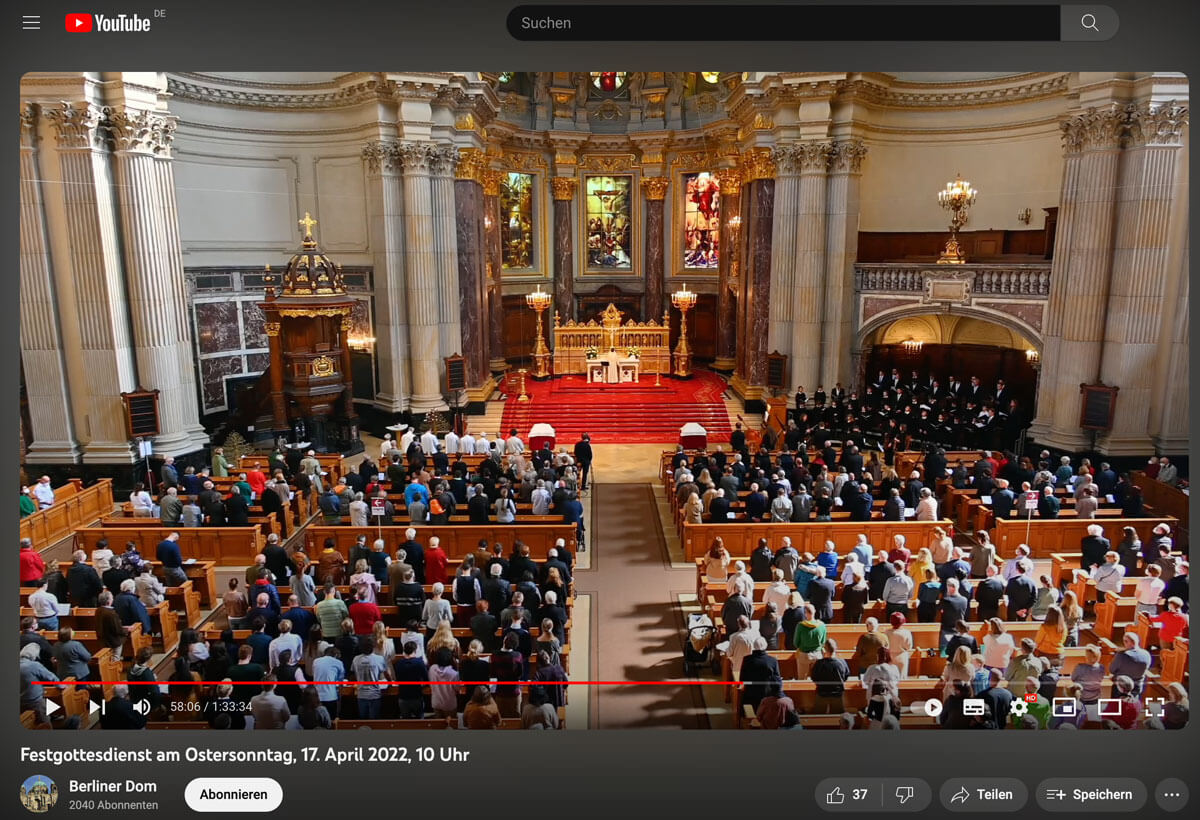
5 When churches in Germany had to close for several months because of COVID-19, you were still managing director of Berlin Cathedral. In what way was the pandemic an accelerator of digitalization for your parish?
We have already talked about streaming offerings as an important part of the digitalization of the church. Beyond that, we absolutely had to digitalize our administration, which was still based on a filing system from 1970, because working from home suddenly took on a whole new significance. In the short term that made our employees able to work at all, and in the medium term it made their work incredibly much easier. A lot more flexibility and efficiency came into the tasks that way. At last nobody has to walk around looking for some file, that all happens automatically now, and of course we also have access to our files from any computer in the world. During the pandemic we simply started out of necessity, and by the end we had successfully digitalized the past 15 years. Without Covid that pressure would probably never have existed. Back then we simply had to sort a lot of things out, and it worked wonderfully. That gave me a great sense of confidence.
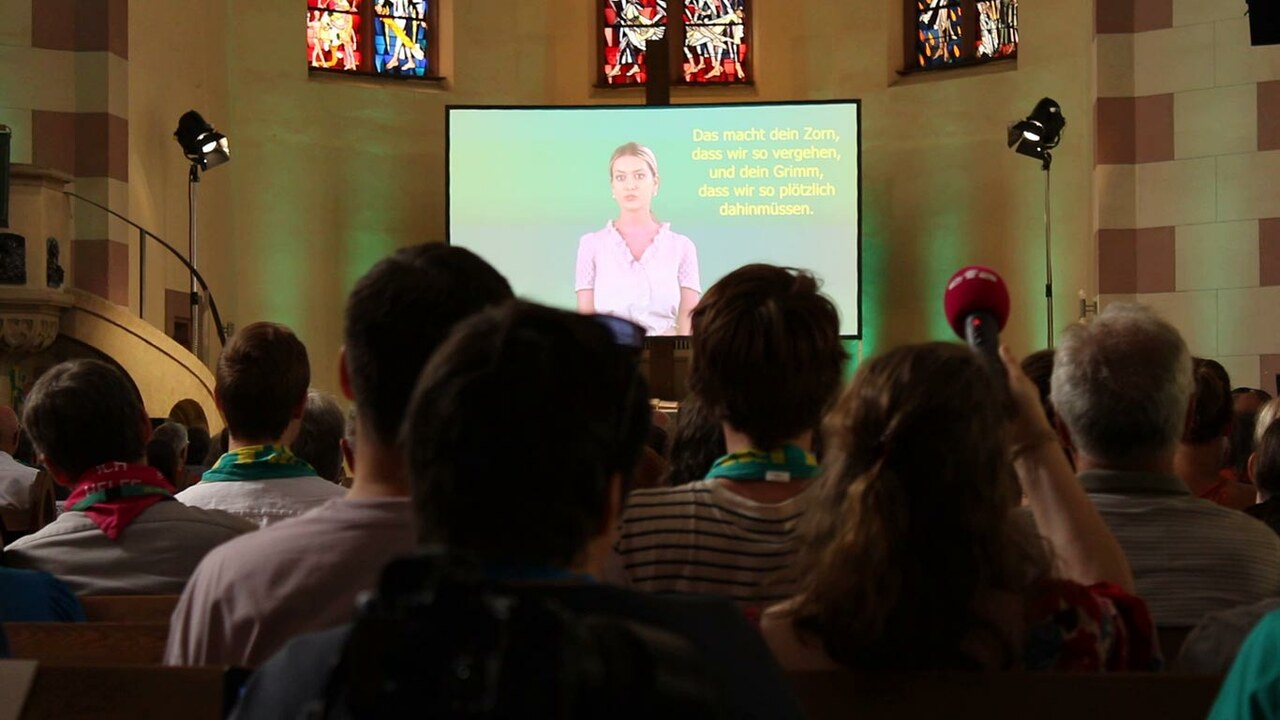
6 At the Protestant Kirchentag, the first German church service devised and led by ChatGPT was held. In what way is AI a useful tool for pastors?
AI can already speed up our simpler tasks considerably, in administration for example. With creative tasks such as preparing a sermon I am still cautious, because the pool of data ChatGPT uses is still very limited. When I use the technology for suggestions for a sermon, for example, everything I get back so far has an extremely formulaic sound to it. As soon as the available data in this area increases, though, the possible uses of AI will grow quickly here as in other industries. I am convinced of that. But if the tool can currently draw on almost nothing but sermons that are decades old, the results are rather inadequate, because terms are used that have fallen out of their time and that nobody understands any more. I think this kind of communication is one of the biggest reasons why fewer people go to church and why we are losing relevance in general. Personally, by the way, I have already used AI tools successfully for administrative and research tasks, for a somewhat history-heavy university seminar for instance.
7 The Protestant Church is in the middle of digital change. How can this shift succeed for such a large organization with millions of members?
As with all large organizations, the challenge in the digitalization of the church lies in a certain bureaucratic quality. In a positive sense that provides a lot of structure, but it also leads to enormous inertia. Since we have to bring a great many people along, these change processes take quite a long time, as I said earlier. Experience shows there are around 20 percent who put the brakes on, but the large majority are usually very open. At the moment the way it works is that every parish in the church runs its own digitalization projects. That works too. Still, my assessment is that somewhat more central guidance would do us good. You could develop concepts for certain areas of parish work, for example, and set up central teams that then travel around to support parishes at specific points in delivering these digital projects. There has already been a similar initiative from our regional church in a different context. It was well received and is still running very nicely. What you have to know is that the headquarters of the Protestant Church in Germany (EKD), for example, or the 20 regional churches can only make offers. Whether to accept them is entirely up to the individual parishes on the ground.
8 Regional churches are launching their own initiatives, a nationwide unit for digitalization in the church is setting its own priorities, and a digital innovation fund is supporting promising projects. How autonomous and agile are you as a parish when it comes to new projects?
We can be very autonomous and agile in digitalizing our church, that is the good thing about the Protestant Church. As a parish we have maximum room to move. Provided we can shoulder the funding on our own or together with other parishes. There is no supervisory authority in the classic sense here. Our joint app project for Berlin Cathedral is a good example of that. Although the cathedral, despite Corona and considerable losses, was of course able to move certain sums much faster, because by comparison it generates a fairly high revenue. On the subject of agility, I would also like to mention that a parish like ours is organized very democratically. That is to say, the parish members elect a council, and alongside that there is a pastor who leads the fortunes of the parish together with that council. That creates a strong culture of participation. But once you know these structures, you can work with them well.
9 Interactive online platforms for young people, digital parish administration, online education courses, church apps and a presence on social media. Where is digitalization in the Protestant Church heading in the coming years?
I think the journey will go pretty much in the direction you describe. The things you mention will be expanded even more widely. On top of that I would like us to bring users into services and other church events interactively. Two classic examples of digitalization in the church: why should someone at home not type in a prayer request that is then shown to me as a pastor on the iPad at the front? Or why should someone at home not be able to ask a follow-up question during a discussion event? I want to get much further in that direction here in Potsdam. I also see a lot of potential for community in digital spaces. It exists here and there, but it could be much more. Resources play a big role there again, because moderating on Facebook, for example, costs time and is exhausting. But with more social media training a lot could still be moved. I know a few colleagues who post regularly on Twitter or Insta. I think that is great, precisely because the barrier is so low and you reach new target groups very well. From my point of view, for at least 20 years we have been changing from a come structure into a kind of go structure: people no longer turn up at the service almost automatically, we have to go to them digitally. And I think that will gradually take hold, because our existential human questions have not become fewer. Religion is not disappearing, but the institution of the church is losing significance without successful digitalization.
10 Which new conviction or habit has improved your professional life the most over the past 5 years?
The biggest is certainly what we are doing right now: video meetings. That is such a gift for me. Being able to hold ten of these sessions one after another with different people across Germany and around the world saves me a lot of time. I also notice that my digital gatherings are much more focused and productive, and that acceptance of online meetings has risen sharply among older people too. And then there is consistently using my smartphone. Because I have constant access to my calendar and all important documents, files and so on, I can quickly answer an important email on the way from daycare to the church, for example. That has made it much easier to combine family and work.
Would you like to find out more about our joint app project with Berlin Cathedral? Here is the case study.


Tech Newsletter
Join our 2,000+ subscribers and receive monthly updates on our latest articles, case studies, webinars, events, and industry news.