Quality assurance for custom software: insights into manual versus automated testing


In our dynamic world of custom software development, quality assurance (QA) plays a decisive role. First, to make sure your software solution runs smoothly, and second, to meet the requirements and expectations of your users. For my team and me, quality assurance goes far beyond simply detecting errors and extends to ensuring quality, reliability and usability. In this article I take a closer look at the fundamental goals of QA, the challenges we keep mastering in our projects and how agile methods and continuous development are transforming our testing landscape.
What QA means in software development, and what makes it special
For us, quality assurance is not an isolated step at the end of our development process but an integral part of the entire software lifecycle. Our main goal is not only to identify errors, but to make sure the software meets the requirements, standards and expectations. Through careful testing, our software testers can make sure that products and projects not only work but are also efficient, secure and user-friendly. So it is not only about finding errors, but above all about securing quality.
In the world of custom software development, our developers and software testers often face unique challenges. After all, every application is one of a kind, tailored to the specific needs of our customers. That leaves our testing teams with the task of meeting common standards while checking individual requirements precisely. At the centre of this is the balance between flexibility and structure, to make sure your software not only meets all current requirements but also stands up to future adjustments.
Agile software development has revolutionised the way teams work. It allows our project teams to adapt quickly to changing requirements and to deliver new software versions at ever shorter intervals. For that to work in practice, we integrate automated tests wherever it makes sense, in order to safeguard the speed and the quality of software development.
How our proven QA approach works
Maximising test case coverage is our central concern. To make sure every facet of your application is thoroughly checked, my team and I use a range of testing methods.
Part of these checks is done manually on physical devices, to make sure the software works reliably under real conditions. This approach is particularly important for making sure your user experience is consistent across all devices and platforms.
Our software developers also contribute to test case coverage by implementing automated integration tests. These tests focus on the individual components of an application working together smoothly. They let us uncover potential conflicts and problems early, before they develop into serious errors.
QA also plays a decisive role for us in automating frontend and API tests. Automated frontend tests ensure that your user interface works correctly and that all user interactions run smoothly. At the same time, automated API tests take over checking the interfaces between different software components. Combining these automated tests not only allows regression tests to be run faster, but also ensures comprehensive test coverage across different levels of the application.
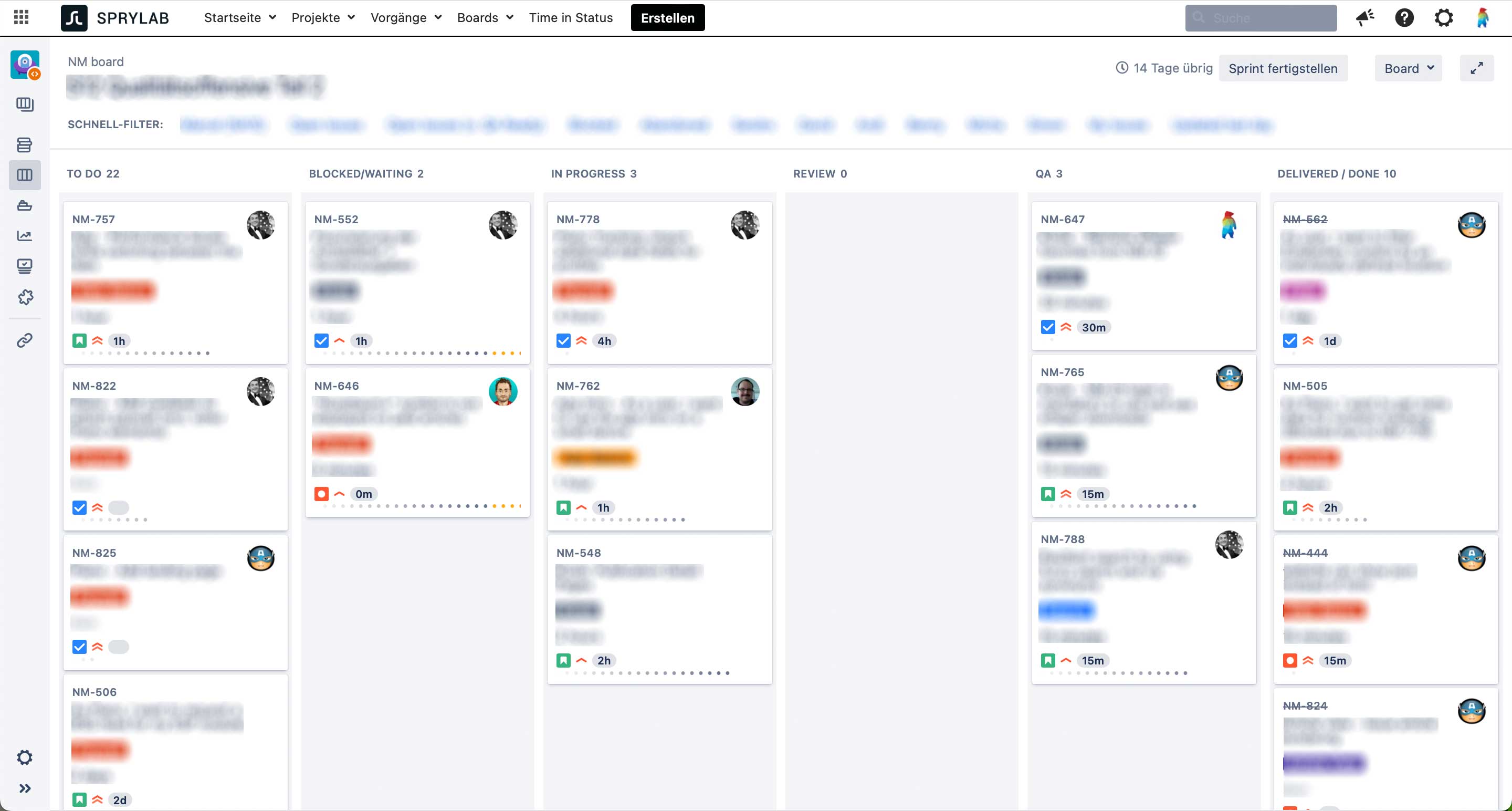
The synergy between manual and automated testing approaches, combined with a wide range of physical test devices, creates a robust testing strategy that has never let us down in more than 120 projects. This holistic approach helps ensure the reliability, performance and usability of our software solutions while we maintain the agility of our development processes.
As mentioned, manual and automated testing are both central at SPRYLAB as a software development agency, and which we choose in any given case depends on various factors. Manual testing is particularly suited to bespoke projects where flexibility and fast adaptation to changing requirements are decisive. With one-off projects such as developing MVPs it can also be more cost-efficient.
Automated testing, on the other hand, is what we use for checking standardised components, since it allows existing code to be reused. For us that includes projects with the Directus backend, our own Purple backend, mobile applications and websites built with Purple Experience, as well as various APIs. The efficiency and repeatability of automated tests are particularly beneficial for us in large projects with continuous integration.
Ultimately the decision between the two approaches should be well considered, in order to meet the specific requirements of your project and ensure software quality.
My forecast: the road to smarter quality assurance
For me it is clear that artificial intelligence (AI) will play a key role in QA in future. Automated test case generation, intelligent error detection and autonomous testing will increase our efficiency further and shorten our development cycles. AI can not only take over repetitive tasks but is already able to recognise complex patterns and connections in huge volumes of data, in order to deliver precise test results.
From stronger AI integration into software testing I expect a significant acceleration and improvement of our testing strategies, so that we can meet growing demands for quality and speed.
Overall, the evolution of quality assurance shows me that adaptability and a willingness to integrate new technologies are decisive. The journey from manual testing to automated approaches and finally to the integration of AI marks an unstoppable progress that appeals to me personally. In this changing landscape, the art of software testing remains for me a fascinating interplay of human know-how and technological innovation that forms the basis for reliable software solutions.
Conclusion
For us, quality assurance for custom software shows itself in the balance between manual and automated approaches, and in variety and precision. The various testing methods, from manual checks on physical devices through to automated integration tests and comprehensive frontend and API tests, form a well-rehearsed process that reliably ensures the quality and functionality of your software solutions.



Tech Newsletter
Join our 2,000+ subscribers and receive monthly updates on our latest articles, case studies, webinars, events, and industry news.