ChatGPT and co: what platform companies need to know about artificial intelligence now


Artificial intelligence has taken on enormous social and economic significance in recent years. AI makes it possible to automate repetitive tasks and increase efficiency. Tools like ChatGPT are revolutionising the way we think about processing and generating knowledge, and entirely new forms of communication between people and machines are emerging. What do you as a company with a platform business model need to know about artificial intelligence and the possible applications of ChatGPT now?
1 What is (Chat)GPT
(Chat)GPT stands for "chatbot generative pre-trained transformer". A chatbot is an application that uses artificial intelligence to hold natural language conversations with people. ChatGPT is a language and text-based chatbot that was trained on millions of texts from the internet, social media, online forums, newspaper articles and books. That makes it able to write short texts, compose poems, translate texts into other languages, run spell checks or find errors in code you have written yourself. ChatGPT was developed by OpenAI, an AI research company based in California. Within three months, ChatGPT grew to 100 million users.
What is currently referred to as artificial intelligence are prediction models that have been trained, and continue to be trained, for one very specific use case. Not a generally valid artificial intelligence that can do everything. In the case of ChatGPT, it is word probabilities. The task of this AI model is to continue a text and to calculate the next word, or whole sentences and paragraphs, in order to do so. What matters here is how well and how precisely the prompts, meaning the instructions to the model, are formulated, since they set the context for the text you want. Through use by many users, the model is continuously trained further and gets better.
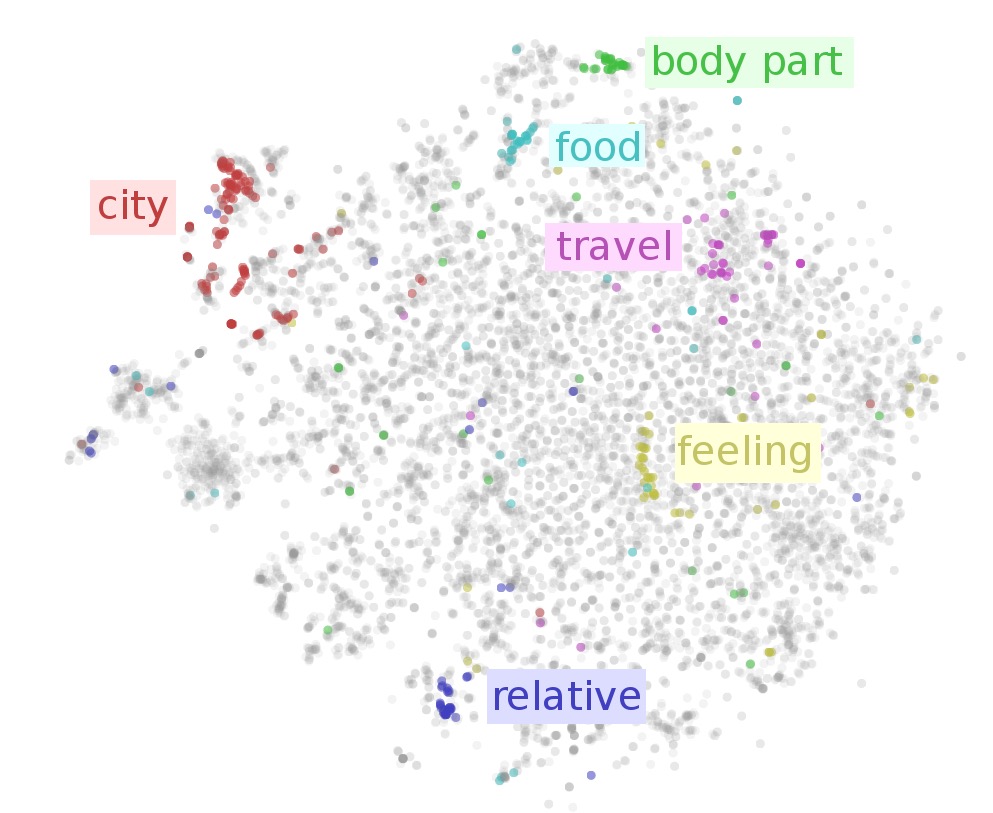
The probabilities and the assignments that tell ChatGPT's artificial intelligence which words belong together are represented by what is known as an embedding. Words are arranged in a multidimensional space for this, and by analysing existing texts the AI learns what relationships exist between them. Building on that, there are 96 levels of indirection on which semantic connections between words are also established.
The artificial intelligence model behind ChatGPT is not new, but since 2018 there has been heavy investment in the subject and larger models with more parameters have been developed. The result is far higher performance and a far greater ability to handle complexity in the field of language models. ChatGPT extended the GPT language models with further layers, for example the RLHF layer (reinforcement learning from human feedback). This means ChatGPT additionally learns from all the user interactions and feedback. A safety layer was also added, which is meant to prevent the creation of racist texts, for example.

2 Use cases for ChatGPT on platforms
ChatGPT offers your platforms and portals a wide range of possible applications. From creating content to optimising website content, this technology opens up new ways to address users and improve your platforms.
Case 1: content creation and website optimisation
You can use ChatGPT to generate content for your information pages. The model can help create SEO-optimised texts that make the platform easier to find in organic search results. This approach carries certain risks, though. Although the generated content can be impressive on the surface, the quality of the substance often leaves something to be desired, particularly when the model has an entirely free hand. There is a difference here between extracting information from texts and generating completely new content. Search engines such as Google rate pages negatively if they offer too much mediocre ChatGPT content.
Case 2: more autonomous platforms
Where a person was needed before, the model can now process information independently for you. An interesting paradigm shift arises from the model's good grasp of excerpting, which lets it pull complex information out of a text, and from the ability to give the model instructions in natural language. You can now automate more tasks that previously required human feedback or intervention. The artificial intelligence can support translation, the extraction of relevant information from phone calls or the filling in of forms, for example. The line between machine and human performance has shifted noticeably as a result.
Case 3: individual algorithms
With ChatGPT, it is not only professional developers who can design individual algorithms. Anyone can write instructions and experiment with the model in order to carry out particular tasks. For you as a platform operator, that means you no longer need internal machine learning teams or specialist expertise to use this technology. Fast prototyping and testing become possible. The democratisation of machine learning should be viewed with some caution, though, since OpenAI currently holds a leading position as a commercial provider, until the competition catches up.
ChatGPT offers you interesting possible applications, particularly in content creation and website optimisation. The technology makes it possible to handle more tasks autonomously and to carry out individual instructions without depending on extensive expertise or machine learning teams of your own.
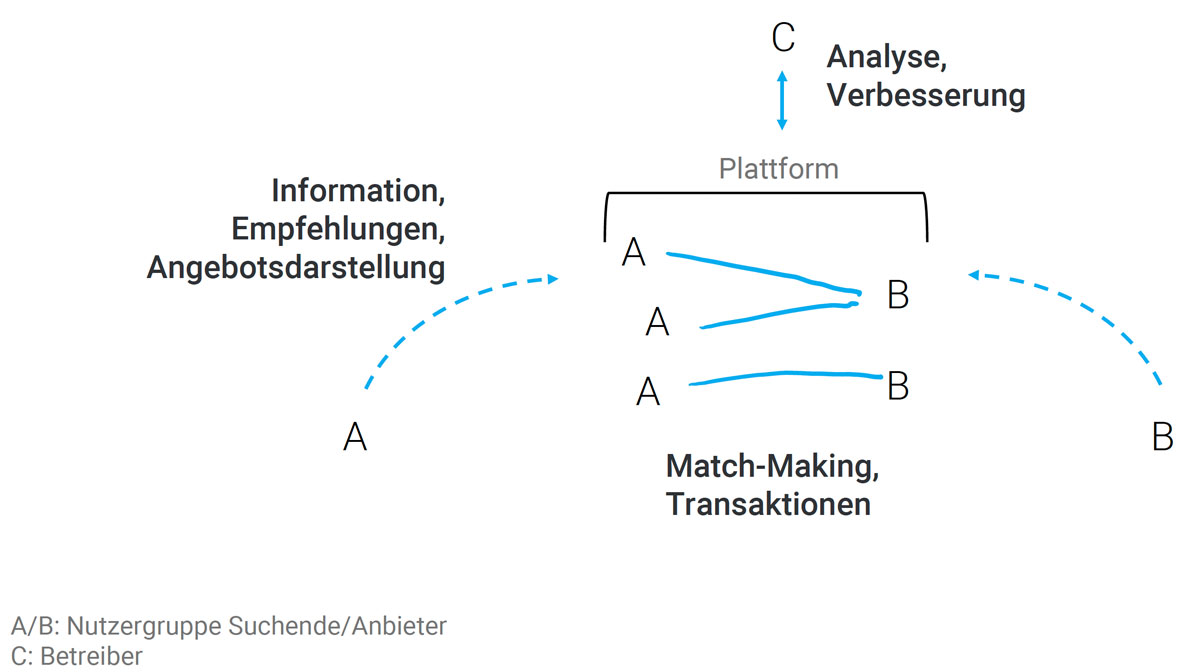
Addressing user groups better with language models
On a prototypical platform there are various ways to use language models sensibly in order to address user groups, provide information, give recommendations and present offerings. The result is that users are guided through the platform in a targeted way, in order to carry out certain transactions for example.
Case 4: information, recommendations and presenting offerings
Artificial intelligence and natural language can be used to address users in a targeted way. Instead of relying on conventional SEO landing pages or information pages, you can run an automated dialogue with users. By training the language model, it can inform and categorise users better, which leads to more targeted interaction. Instead of users searching for information themselves and then registering, the automated dialogue can take them straight to the right place on the platform.
Case 5: voice interaction and speech generation
The possibility of natural spoken conversation improves interaction with the system. Voice-to-voice communication, speech recognition and speech generation allow more natural and more effective interaction, in which a screen may not even be needed. That opens up new ways of using the platform and can improve the user experience.
Case 6: understanding context and analysing text
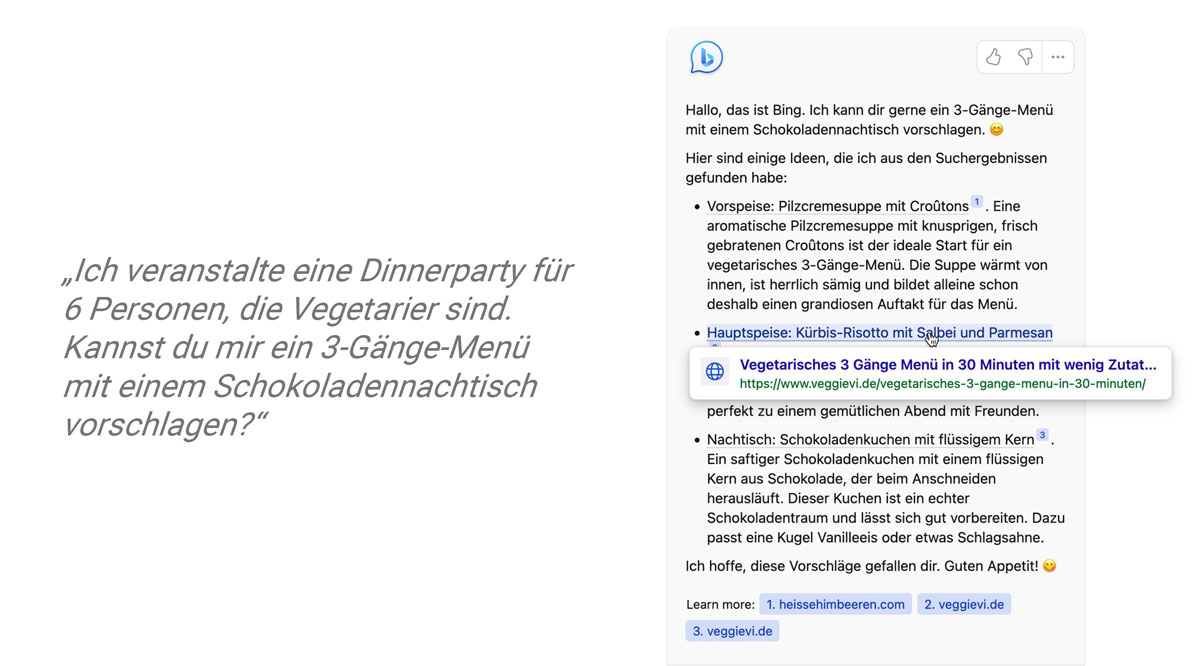
A language model can help with understanding context and use text analysis to offer users relevant help, for example. If a lot of text is exchanged on the platform, in chat messages between providers and people searching or in profile descriptions for instance, understanding that text can help recognise users' situations and needs better. On that basis, quick actions can be suggested in order to meet them at the relevant points. Extracting information also allows data to be structured and prepared better, which leads to improved communication and a better search experience for your user groups.
Case 7: analysis
Using language models allows you to analyse data more easily and thereby improve your platform continuously. By summarising information and structuring offerings, relevant categories can be extracted and search results prepared better. That contributes to the quality of communication and of search results. It is important, though, to define the limits of the system well, in order to prevent the language models from generating false information. You should work on training and constraining the systems precisely, to make sure they serve the intended purpose.
Wondering what potential AI could unlock in your company? Request an AI workshop now.
How language models can improve match-making and transactions
In the world of digital platforms, match-making and transactions play a central role. From dating platforms through to marketplaces for services and products, bringing supply and demand together successfully is decisive for a platform's success. In this context, language models such as GPT offer new ways to improve the match-making and transaction process.
Case 8: extracting information
One of the main advantages on the user side is that language models can help improve match-making further. Not because these models can generate better matches between people searching and people offering, but because they are able to extract relevant information from profiles, messages and other forms of self-presentation more effectively. By extracting keywords and categorisations, this information can then be fed into a dedicated matching algorithm. It is important to stress, though, that language models such as GPT-3.5 are specialised algorithms and only work as a supplement to match-making algorithms.
Case 9: automation processes
Another aspect in which language models play a significant role is process automation or process digitalization. Until now, many tasks had to be done manually by people. Now machines can create automated to-do lists, generate actions based on conversations and send automatic follow-ups with summaries by email. The goal of this automation is to make the transaction process simpler and more efficient for both sides.
These automation options can be extended to the provider side as well. Say a provider receives a large number of enquiries. Automated or semi-automated messaging systems can be used here to reduce the workload per transaction and thereby become more efficient.
Case 10: metrics and analytics
Interesting perspectives open up for you as a platform operator too. On the one hand, language models allow deeper analysis and a better understanding of platform users through new metrics and analytics. Natural speech recognition makes it possible to identify previously hidden information and potential problems that had to be read manually before. For you, language models also offer the chance to simulate entire user groups, particularly on the provider side, in order to strengthen the network effect. Because a platform becomes more attractive the more users it has, and simulating provider profiles can help attract more users and support the platform's growth.
The technical possibilities for using language models on platforms are varied. The legal and moral aspects have to be considered carefully in every use case, however.
3 Limits and challenges when using ChatGPT
ChatGPT undoubtedly has the potential to support you in many respects. It makes it possible to automate customer support, improves the user experience and makes exchanging information easier. There are also limitations and challenges that have to be taken into account when using it, though.
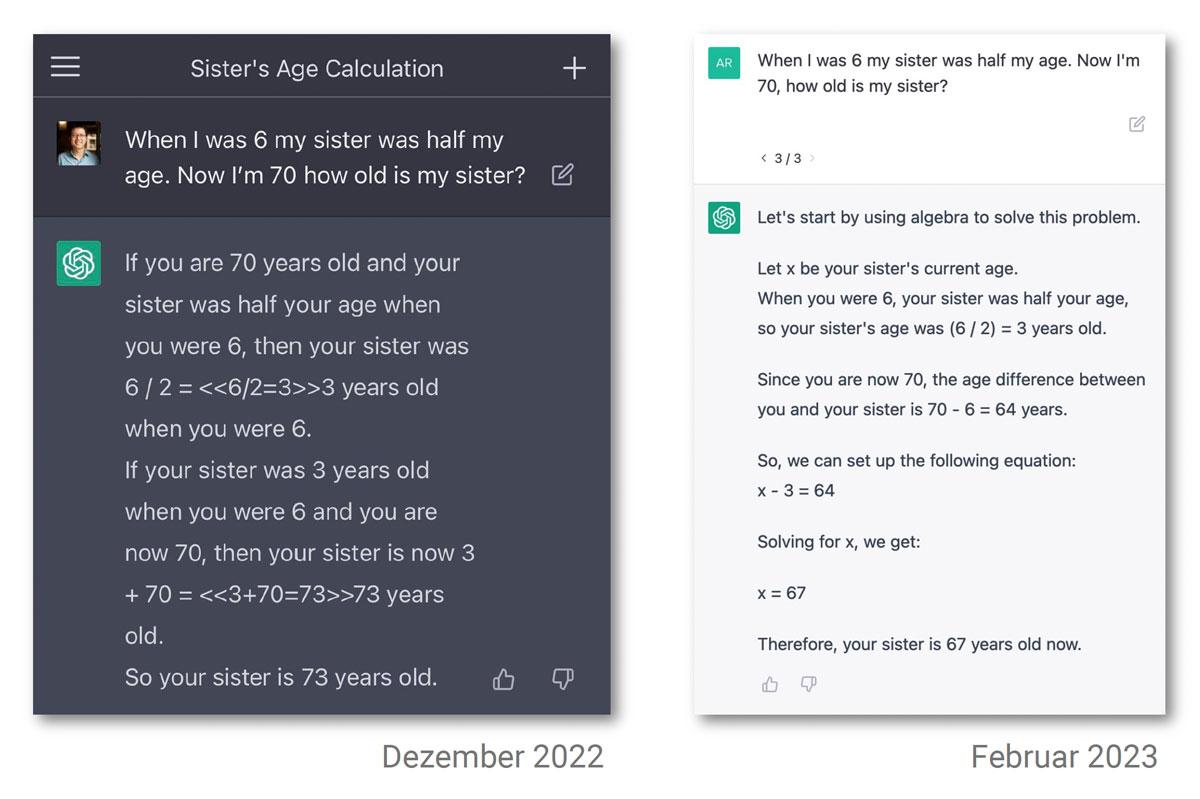
ChatGPT is a model that can summarise and generate content very convincingly on the basis of prompts or instructions, but there is no certainty that this content is correct in every case. That is one of the biggest challenges with this kind of artificial intelligence at the moment. The model is trained to finish writing a text on the basis of probabilities. Whether all the information is accurate is not something the model holds. The language model is also not a logic model, and ChatGPT has difficulty solving maths problems, for example. Its grasp of logic is constantly improving with more training, though.
For German and European companies in particular, there are major restrictions on using ChatGPT in terms of data protection and compliance. At the moment all inputs to ChatGPT are recorded and used for internal training. OpenAI's registered office is in San Francisco, which means the model is subject to US law. Every company should therefore be careful about entering internal or personal data, since it becomes training data for the artificial intelligence. If your company is subject to the GDPR, you cannot simply use ChatGPT, because in its current version it is not GDPR-compliant. OpenAI is already working on a new compliance solution for Europe, however.
4 ChatGPT-4 and co: what comes next?
The future holds interesting developments for you with ChatGPT-4, the successor to ChatGPT. Although it has not been released yet, there is already speculation about its improvements. You can be sure that ChatGPT-4 will be larger and can therefore offer a marked increase in quality.
Alongside ChatGPT-4, a large number of AI extensions will come to market. Practically every text tool will use these extensions, which will give rise to a large number of new start-ups and applications, driven by advances in text analysis.
There will be many new use cases in future, and processes will be automated that currently still need human involvement. Which use cases succeed remains to be seen.
5 Summary
ChatGPT offers you a range of possible applications in content, matchmaking and interaction with your users.
- Content creation: ChatGPT can support you in generating high quality content in various forms.
- Understanding extraction: through its ability to extract content from texts, artificial intelligence offers possibilities for contextual suggestions, summaries, information and improved matching.
- Language capability: ChatGPT narrows the gap between users and platforms in communication, whether through chatbots or direct voice communication (voice to voice).
- Partial or full automation of the process chain: ChatGPT can support users and even replace certain user groups entirely. That gives you the advantage of no longer needing a dedicated machine learning team, which has consequences for how you staff your teams.
Interested in using artificial intelligence in your company? Then find out more about how intelligent software can deliver a new level of efficiency and performance. If you have any questions, you can get in touch with us at any time. Our ambition? Transparent AI consulting that makes AI understandable, assessable and applicable.



Tech Newsletter
Join our 2,000+ subscribers and receive monthly updates on our latest articles, case studies, webinars, events, and industry news.